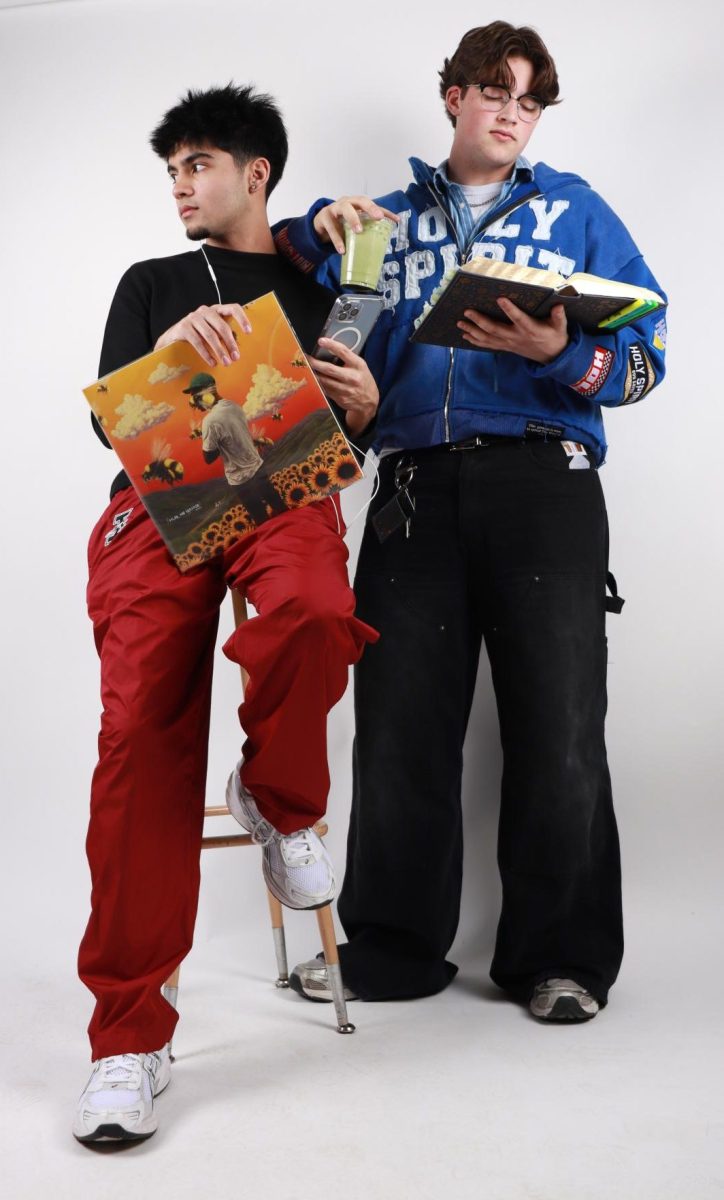
From matcha lattes to wired earbuds, one of the new fashion trends, the performative male is defined by baggy jeans with carabiners holding keys, canvas tote bags filled with books written by Jane Austen or Virginia Woolf and scrolling through Spotify to find the next indie artist. But it isn’t just a look. It describes the personality of a boy catering to the female gaze.
As this trend progresses and more people get the title, some wonder if it is a compliment or not.
“I was called one [a performative male]; I decided to just look it up,” junior Maddox Middleton said. “I surround myself with performative males and tried to become like them for a little bit and I learned from that.”
Middleton said that performative males are generally in touch with their feelings and prone to compliment girls a lot.
“I personally don’t [call myself one], but people say I am… I don’t consider myself one because I don’t read feminist literature…I also don’t own a single Labubu, which a lot of performative males own,” Middleton said. “And people say I am because I have a carabiner, but it’s just convenient to have your keys right there.”
Every person has a different explanation of what a performative male is, but they all stem around the need for attention.
“If I were to describe a performative male to someone that doesn’t know what it is, I would just say an attention seeker,” Middleton said. “Down at heart and a fake persona of a person. Because technically, they’re not really being their true selves. They’re just being a performative male, which means they’re performing.”
When the trend first started, it referred to a guy wanting attention but now people have started to take the trend to extremes.
“They’re very fake,” senior Michael Ewald said. “I mean, they’re obviously not being genuine to who they are personally. And it’s very clear they’ll be saying stuff and not really know what they’re talking about, but pretend they do.”
Many high school guys wear clothes that are considered performative and get the label, but may not act like one.
“I think maybe it’s about the teens trying to find an identity for themselves,” psychology teacher Josh Posegate said. “So it’s just them experimenting, which is a traditional teen thing to do, to try to find kind of where they fit, to find their group.”
Junior Rush Crayon said they dress in “old money” outfits and try to stand out. Crayon does not consider himself as performative, but enjoys matcha and tea from TeoOlogy in Springfield.
“I don’t think it’s a bad thing, but it could be misinterpreted by others for sure,” Crayon said. “It’s not [a] problematic [trend], but [they] want validity from others. It’s better than other trends, but you should just be yourself.”
While Middleton doesn’t give himself the label of being a performative male, he enjoys the clothing style. He said he’s not performing for anyone, only himself.
“For me it is a bad trend, because everywhere I go there’s a performative male,” Middleton said. “If I want to drink matcha one time I’m not doing it for the style. I would drink it in a [disposable] coffee cup so it doesn’t even look like it. And when someone asks and I tell them it’s matcha I get called performative. So I think being called a performative male turned from a compliment to an insult now.”
With many teenagers on social media, trends are able to spread faster than ever, telling teens what and how they should look and act like.
“I think in a lot of ways people want attention, positive [attention] or any attention and I think this is one of those instances where that’s the case,” Posegate said. “And it’s definitely a reward when people get those things. I think [teens] have an expectation to try to fit the narrative of whatever the trend might be.”
Posegate said that whatever challenge or clothing is popular at the time that teenagers will try to fit in with it, but most teens grow out of it eventually.
“It started off from kind of criticizing people for playing stuff up, but then it moved to more calm stuff,” Crayon said. “And a lot of the time, just stuff that people like that happens to be a little different.”
With all trends there are positives and negatives and this trend is no exception.
“It’s hard to say [if the trend is good or bad] because it has made a lot of men more respectful towards women, which I feel like is a good thing because a lot of people were being mean,” Middleton said. “But it also tells people to be fake, and like to be nonchalant when I’m more of a chalant kind of guy and I feel like you should be yourself.”
Students who have been labeled as performative agree that people should be themselves, they can dress, act and be interested in what they want and don’t have to put on an act to find friends or relationships.
“I think people should just be themselves,” Ewald said. “I don’t think they should join in on being performative, because that’s just being fake. I think they, if somebody finds out who they genuinely are, then they should go for it and genuinely be themselves. But if you’re having to put on this act to be somebody else, then it’s just a lie that you’re telling yourself.”