Sweet-smelling donuts paired with the warm air to create the hugging atmosphere of the room on a Saturday, as a mother and elder son worked before closing at 1 p.m.
An old lady in a deep pink puffer coat entered and asked if they had a specific apple donut. The son checked with the mother, who replied they had run out of those. Looking at the glass display of donuts, she settled for the cinnamon ones tucked far behind the glass.
Mother and son would close, clean and go home. Taste Donuts is open seven days a week and Chanrasmey Khlum’s 1:30 a.m. wake up routine works on par with it.
“Before I worked at the restaurant, we worked in so many companies, and we didn’t have time for the kids,” Chanrasmey Khlum said.
She and her husband lived in Texas around 10 years ago. They currently work doing the same thing.
“Maybe from my heart to support my kids, that’s my power to get up early in the morning,” Khlum Chanrasmey said.
Chanrasmey came with her husband from Cambodia 18 years ago. They have three kids. They applied for a Diversity Immigrant Visa (DV) to come to the United States. At random, applications submitted are drawn and the people whose application was drawn can come.
The U.S. Department of State writes that DV applicants must have either a minimum of high school education, or at least two years of job experience equating that. The spouse and children are not required to do this, just the applicant. Countries are selected for this program based on low numbers of immigrants to the U.S.
“They [Cambodia] have a lot of poor students around the country, [her husband] won the lottery and we came to the U.S.,” Khlum Chanrasmey said.
The Taste Donuts at 710 W. Mt Vernon St. opens at 4:30 a.m. through the drive-thru, and at 5 a.m. opens its doors for customers.
“I don’t care about the time to sleep, I care about what they [kids] want to eat,” Khlum Chanrasmey said.
She works hard to give her children a better life. Her reason for staying in Missouri was to bring stability to her kids.
“That’s a mama thing,” her eyes scrunched as she gave a full smile.
Her eldest son, sophomore Jumsovanmuney (Alex) Khlum grew up in the business. They taste every donut type made for quality.
“I would sleep on donut bags because there was nothing to sleep on,” Jumsovanmuney said.
When they go out the family speaks in English, but at home, all family members speak Khmer. Not every immigrant parent speaks their native tongue to their children. This is one of the reasons why kids with immigrant parents may only speak English.
“She won’t reply back if I speak English,”Jumsovanmuney said.
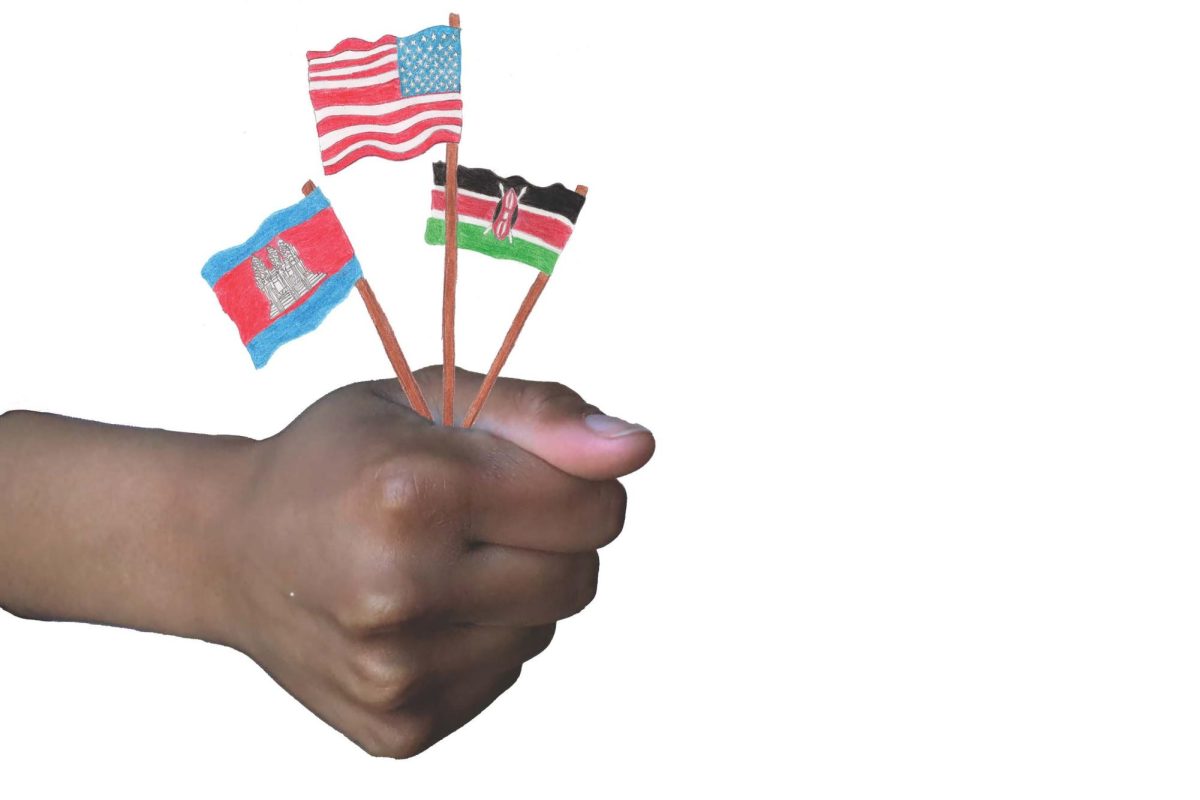
As a family, they try to celebrate traditions from both Cambodia and the U.S.
“We love both,” Chanrasmey said. “We still remember [our country] because we grew up in a small country.”
Taste Donuts has two locations, both in Nixa.
Sophomore Zoiya Okumu’s middle name, Anyango, means born in the evening. She shares her middle name with her Yaya. That would be ‘nanny’ in Swahili. Her family had a big reunion in Kenya, where she visited 10 of her relatives’ houses
“I went to Kenya in eighth grade in December to see my family,” Okumu said, “because I have family all around the world, we met up with my family from the UK who went to Kenya, my family who lives in Australia went to Kenya – and then we went there too.”
Okumu went on safaris when little. While some safaris were forgotten because she was too tired to remember, others were not. In those she saw elephants, giraffes and lions. Ten cars lined up on the road to see lions.
“Well, first I went [to Kenya] when I was maybe 10, and then most recently I was probably like 14… ,” Okumu said. “We went all around Kenya… to see the village where my dad first grew up in Kisumu, and then we went to Kikambala and Mombasa… .”
Kenya boasts a variety of living languages, its official government language being English, and the native language Swahili. Besides those, as Ethnologue states, 61 indigenous languages are spoken.
Okumu’s father speaks Luo, the language of the Luo people, as well as Swahili and English.
“I feel like whenever people think of Africa they think of people running around with spears and stuff, living in… torn down houses, like they don’t really have any infrastructure, which is true, but it’s so much more than that really,” Okumu said. “And also people think of the education there as being non-existent, but a lot of people go to boarding schools and they receive even better education than us, which is crazy. And I feel like that’s a big misconception about Africans is that they’re uneducated when in reality they’re the smartest people.”
In the same way, some Kenyans have their own conception about what an American is like.
“Whenever I went to Kenya I saw that a lot of people, when they saw my mom, because she’s white, they would be like ‘Muzungu, muzungu,’ which is white person in Swahili. They have this notion that everyone in America is… rich and living… the best life, which is true for a lot of Americans. But… they… worship the west, you know, because they see it as this… land where everything’s perfect.”
Okumu said that people can show interest in other cultures by not having judgement behind their questions.
“Because most of the time when people ask questions, they already have an idea in their head of what the answer is,” Okumu said.