Working dogs keep the community safe
Working dogs can make a positive impact in the community by providing essential support across several fields, from police patrols to therapy sessions. Their vital roles with people can help shape safer and more compassionate environments.
Canine Police Officer Ronald Hillburn has witnessed the impact of working dogs firsthand during his nine years with the Nixa Police Department.
His partnership with Jack, a dual-purpose patrol dog, began in 2019 and has shown him the capabilities dogs have in assisting officers. Jack, a Belgian Malinois, possesses a diverse skill set that includes detecting narcotics, tracking, disaster searches and apprehension.
Jack leads the way into dangerous and uncertain situations to protect officers and Hillburn protects Jack by ensuring he’s equipped with a bullet and stab-proof vest while on duty.
One example of Jack’s capabilities occurred during a tense traffic stop. After a suspect rammed a police vehicle and fled into the nearby woods, Jack was deployed to track him. Jack covered nearly a mile and successfully located the suspects hiding on a porch in a residential neighborhood.
Jack has gone through extensive training.
“Without Jack’s ability to track,those suspects might have still been on the run,” Hillburn said.
While the contributions of police dogs are critical, their counterparts in therapy roles offer equally important support to the community.
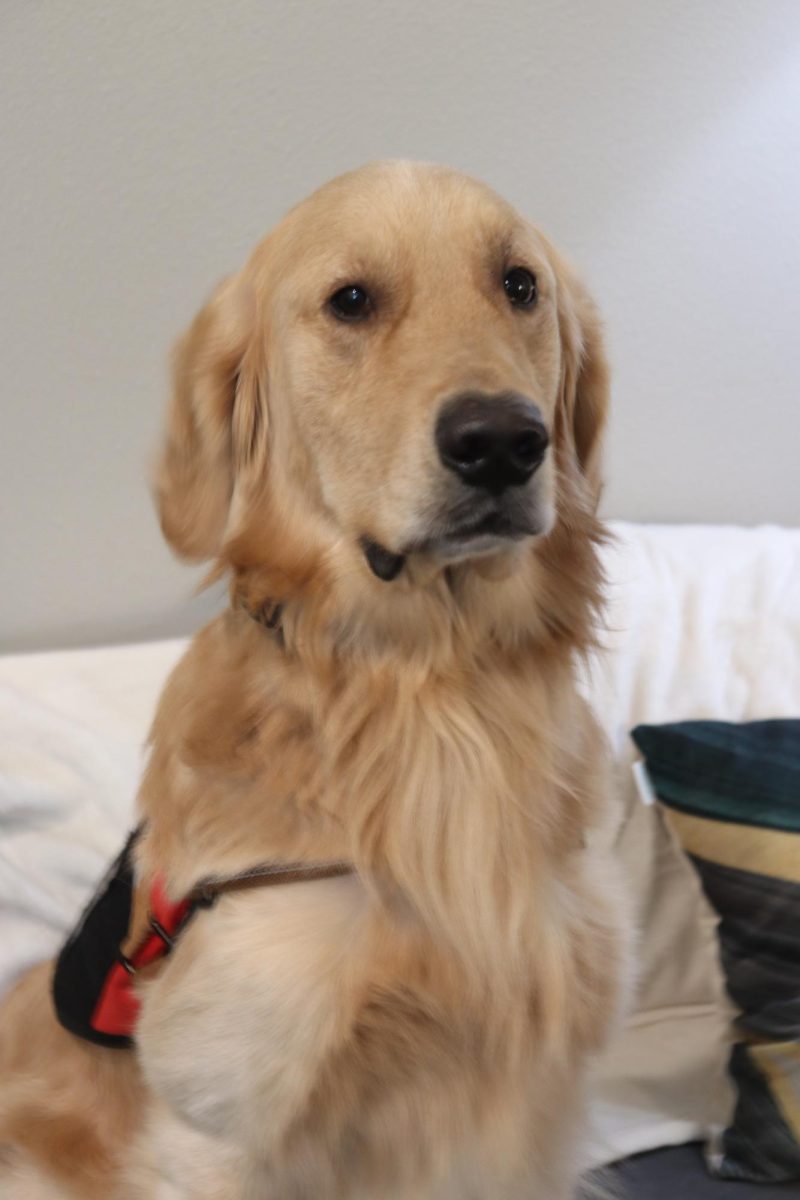
At Touchstone Counseling, Therapist Elizabeth Troutwine works with Goose, a trained therapy dog who fosters a calming atmosphere for clients.
Working two to three days a week, Goose greets clients and often sits beside them during challenging conversations.
“Dogs naturally decrease heart rate and anxiety,” Troutwine said. “Goose is very intuitive and he tends to go toward people the moment they start showing signs of stress.”
Many clients now specifically request Goose’s presence during their sessions. For those managing trauma, social anxiety, or anger management, Goose has become a special part of their healing journey.
“He gives them something safe to focus on,” Troutwine said. “When clients pet him, you can see their shoulders drop, their breathing slow down. It changes the entire tone of the room.”
Another community handler, Mary Datema, discovered her passion for therapy animals through her experiences as a special education teacher.
There was a moment in class when a nonverbal student began to connect with a dog that visited her classroom.
“I watched her just rest her head on the dog and start petting it,” Datema said. “It was like a light switch went on. That moment showed me how powerful an impact animals can have.”
For six years, Datema has partnered with Ellie, her therapy dog, focusing on visits to schools and nursing homes. Ellie is specifically trained to gently interact with children and remain calm in the presence of walkers, wheelchairs and other potential stressors.
“It’s really important that if you see a dog that has a vest, a working dog, that you just respect that they have a task and they’re working and you shouldn’t try to distract them,” Datema said. “Always ask before petting any kind of dog, regardless of whether or not it’s working. The owner will appreciate it.”