Nixa is a well-off suburban city with top rated schools, but underneath that polished exterior, some families are struggling, and some children are without a place to call home. In the Nixa school district there are about 102 recorded students who are homeless.
Schools have different standards for what counts as homeless under the Mckinny-Vento Homeless Assistance Act, which is a federal law that defines what counts as homeless and requires public school districts to provide educational rights and services for those students.
Anything classified as substandard housing counts as legally homeless within schools under the Mckinny Vento guidelines. This could mean that a student living in shared housing, when they live with anyone who is not their guardian, would be considered homeless. Substandard housing also includes living in cars, RVs, hotels, camping grounds, parks, buses, public spaces, abandoned buildings and more.
Even with the over 100 students listed, social workers are still worried some are flying under the radar; students might have fears that they will have to move out of the school district or face judgment from their peers.
“A lot of the 102 were sharing housing,” school Social Worker Jenn Finke said. “It’s considered Mckinny-Vento and what that grants them is, they qualify for free breakfast and lunch at the school. They will get to stay in Nixa for the school year because we don’t like to disrupt routines and a lot of times it’s beyond the person’s control.”
During Finke’s first year working with Nixa schools, the 2021-2022 school year, there were only 24 homeless students, and that number continues to grow each year. Through the social workers’ efforts, they were able to reach out to more students who qualified and weren’t signed up.
“At the beginning of every year, families fill out the returning student registration form,” Finke said. “There are a couple questions on that form … so if they answer yes to one of those questions, it’s immediately sent to me, and then I get a hold of the families and just kind of talk through their situation … and then from there it’s getting them the free breakfast and lunch and then if there’s needs like groceries, a lot of times it’s connecting them with resources, like One Door [Homeless Housing Assistance].”
Finding affordable housing is one of the biggest problems families face. Many times they have to move out of Nixa because of the limited options.
“Affordable housing in Nixa is very very hard,” Finke said. “And then just quite frankly, there’s not a lot of resources in Christian County; a lot of the resources are in Greene County. So honestly, if you are trying to find affordable housing, you’ll probably end up outside of Nixa. But they do have housing liaisons that can help get you on a section eight housing list [subsidized housing], or help with first month’s rent or help with a security deposit for housing.”
In cities like Springfield and Nixa, services for people who are homeless are not as easily accessible as many people might believe.
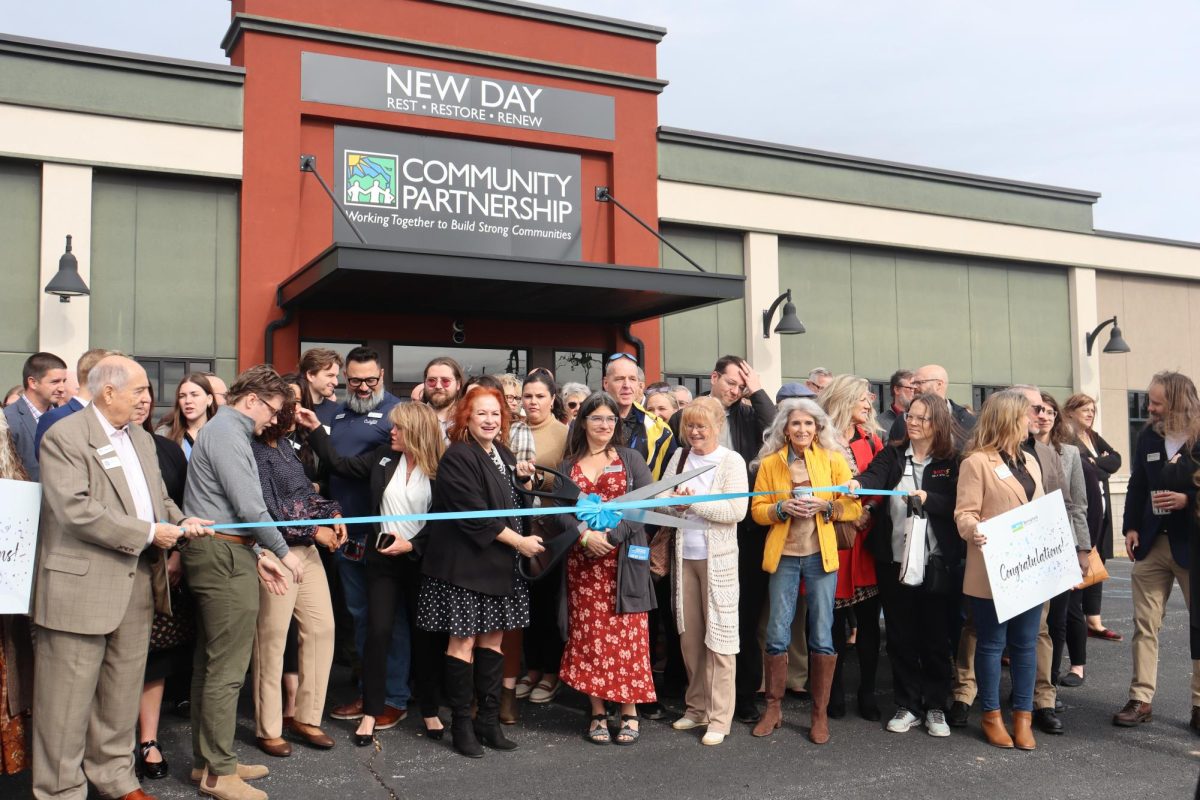
Recently, the Community Partnership of the Ozarks finished building New Day. New Day is an intentional day center for the homeless. It is the home of One Door, which is a housing coordinated entry point that also offers services from the following organizations: Burrell Behavioral Health, Jordan Valley Community Health Center, Legal Services of Southern Missouri, the Missouri Department of Health and Senior Services and the Springfield/Greene County Health Department.
Emily Fesser is a Continuum of Care director for Community Partnership of the Ozarks. Her job is to ensure that the CoC, a federally mandated regional planning body for homeless services and funding, follows all federal mandates. Learn more at cpozarks.org and hudexchange.info. She said inflation has led to more families who are experiencing homelessness.
“What we have seen most recently is an increase in elderly individuals and families,” Fesser said. “We attribute those increases to inflation, the lack of affordable housing, and lack of increases to social supports. What we are seeing is that as groceries, gas, and rents go up, but wages and social security payments stay the same, families and seniors are having to make choices between paying their rents or eating.”
Fesser said that the current administration advised the US Department of Housing and Urban Development to invest in short-term housing such as transitional housing, sober living and street outreach. CoCs nationwide are worried how this will affect the current individuals they are serving.
“Evidence and best-practice shows that Housing First is very successful in ending homelessness,” Fesser said. “This is the approach that other countries have used to ending homelessness, and we have seen great success locally with this approach, but it only works when we commit and invest in affordable housing and the Housing First model. The National Alliance to End Homelessness has put forward numbers of the people who are currently in housing programs across the US. that will be impacted by losing their housing with these changes, and it is a high number. We expect that locally, this will increase homelessness across all subpopulations, especially for those that are currently in housing programs.”
With the shift to more short-term interventions, there are not enough resources locally for emergency shelters, transitional housing beds, sober living beds, or affordable housing to assist all the families that need help.
Michelle Garand, vice president of Affordable Housing and Homeless Prevention at Community Partnership of the Ozarks, said easy ways to help the homeless are to become informed about solutions, donate and volunteer.
“There isn’t one single solution to homelessness, but the communities that make the most progress focus on a few key things: creating more safe and affordable housing, offering strong support services like mental-health care and job assistance, and making sure organizations work together so people can move from crisis to stability quickly,” Garand said.
The U.S. Department of Housing and Urban Development says “homeless” refers to individuals or families who lack fixed, regular or adequate nighttime residence. People who are imminently losing their primary nighttime residence within 14 days, have no other housing options or those fleeing domestic violence with no safe housing alternatives. Learn more at hud.gov.
“I wish more people understood that homelessness is not a reflection of someone’s character—it’s a reflection of circumstances,” Garand said. “The individuals we meet every day are people who have experienced job loss, medical crises, high housing costs, trauma or a lack of support systems. Many are working, many are trying their hardest, and nearly all want stability, safety and a place to call home. I also wish people knew how much strength and resilience exist within this community. When people finally receive consistent support, neighbors often see dramatic progress: reconnecting with family, getting a job, addressing health needs, and ultimately finding housing. The potential is there; what’s usually missing is access, opportunity, and a safe place to start rebuilding.”