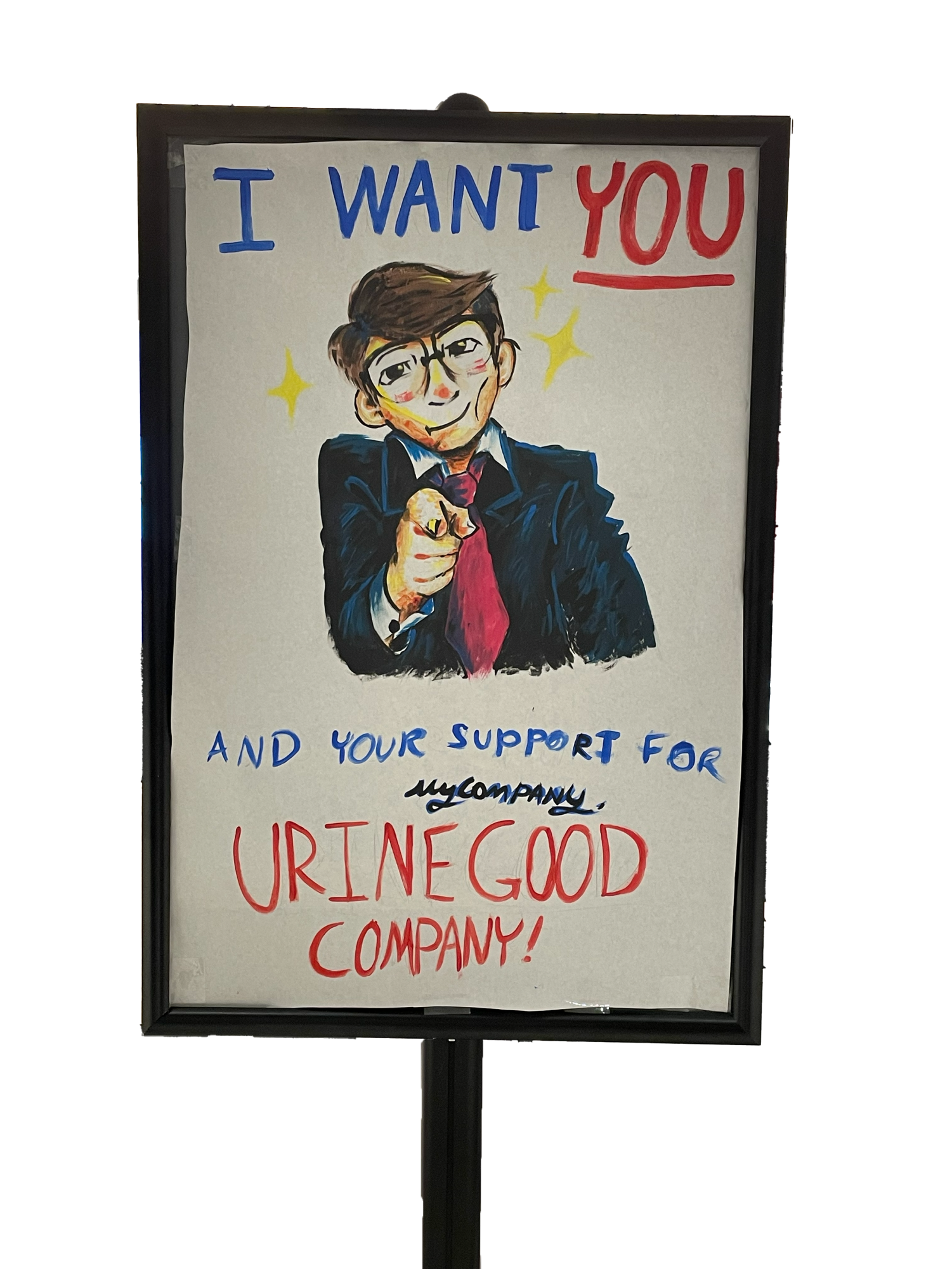
Ladies and gentlemen, welcome to “Urinetown: The Musical,” where public amenities are charged; it is clear your hurry for a cleaner facility town is making you heedless, but slow down enough, and find out about the musical “Urinetown,” brought on by Nixa High School’s theater department. The show happened from April 9 to April. 11.
I really enjoyed the opening act, but the way the second act unfolded, chaotic and increasingly hopeless, left a little hollow ache at the end. While the acting was superb, I went home that night wondering what I had just watched.
“Urinetown” takes place in a world where, after a serious drought, public amenities must be paid for. The rich Urine Good Company monopoly has set regulations and taxes that while, convenient for them, make it harder for the poor folk to use the restroom.
Amid that setting, Bobby Strong and Hope Cladwell fall in love and dare to see a world where using the restroom is free. This dreaming, however, leads to there being no world for anyone.
Divided stood the rich and the poor; the rich mainly were in upper levels, while the poor remained on the ground, or down the sewer. However different they were, both rich and poor possessed this hunger to come on top, and to strike with vengeance.
And, amid all the rich hunters dressed in fancy vests, possessing canes, as Mr. Cladwell sang, there were bunnies all the same. These misled people, bunnies waiting to be stew, left wondering why they listened to him, the Urine Good Company owner, the man who only promised things for himself. Bunnies, who, in the end, paid for the debt they acquired from each other. With strings of blood, that is.
The struggle of everyone to live and thrive throughout the entirety of the musical left one wondering, is there truly anyone innocent?
The acting was immaculate in representing this. Each actor’s movement was clear, and their faces were alight with the humor that tinged the entirety of the musical, tragic and revolution-filled otherwise. This was an interesting choice to bring to Nixa, and I enjoyed seeing something different.
Nixa’s theater department created an immersive world. Had I known how the show would have unfolded, I would have warned the audience of the cops at intermissions and their batons.
They were nice when you’d chat about their affairs — as they seem to love their job— and were amicable enough about enforcing taxes.
“It gets a little rough here and there,” cop Susie Q said. “But we [cops] get it together.”
The cops could be considered the enlightened ones. Very obscurely enlightened, but still so nonetheless. They knew where Urinetown was. They knew that, eventually, they’d all reach it.
They also demonstrated the corruption of the rich and the poor. What made the cops interesting– besides their ‘I’m detaining you for relieving yourself,’ dancing, of course– was the police and un-official commenter of the show Officer Lockstock’s relationship with Little Sally, a poor girl. It was comedic and, in some ways, one of the most humane aspects of the musical. It contrasted the corruption of the cops, willing to accept bribes from the Urine Good Company, with a poor girl counting her coins to use the restroom.
While Officer Lockstock and Little Sally did not change, their relationship often broke the fourth wall, directly addressing the audience to include them in an unlikely bond.
Before a revolution could start, there must be a spark. Enter: naive Hope Cladwell, daughter of Mr. Cladwell, and her encounter with Bobby Strong. Hope’s encouragement for Bobby to follow his heart led to him seizing Public Amenity 9 and granting everyone free access to it, eventually involving a struggle against the whole Urine Good Company.
Following their hearts also, apparently, led them to each other.
Now, I know this may sound a bit off to some of you, but I am wholly unconvinced about the whole follow your heart concept.
“Follow Your Heart” was what Hope sang and believed, yet when everyone happened to follow their own heart, everything seemed to take a turn in a decidedly worse direction. Bobby Strong was the only exception, and he turned out dead.
As to the tears and apparent love shown for Bobby: they were the tears one would shed for a revolutionary, not a lover. It wasn’t a death that was mourned; it was exalted. He changed from being a dreamer to the face of a revolution.
Hope, while proclaiming rivers of justice as the desire of her heart, with that same heart had no remorse when she commanded her father to be thrown off his building. In our faulted condition, can we deem ourselves to be filled with justice and then not display mercy? That doesn’t sound like the heart I’d like to listen to.
The cops, Mr. Caldwell B. Cladwell, Hope Cladwell, Bobby Strong, a revenge-seeking peasantry and the rich; There is no happy reconciliation amongst them. To be fair, we were warned at the beginning that this would be no happy musical.
The musical was a reflection of the bleakest premises of this world; of money-lust, and the hunger for a fractured sense of justice. The message, a confusing one. Is your town to be Urinetown if “you’re hopeless, down, and out”? Or is all the world eventually to reach Urinetown?
Urinetown: a revolution with a vision of eternal clean rivers of justice, to forget that the body that encases it is surrounded by dirt, a dirt which turns that clear river of justice into muddy waters. Urinetown: the musical’s metaphor for death.
It was crushing how the musical ended. After Hope’s father was thrown off his own building, Hope became its leader and allowed everyone access to public amenities for free. Free for everyone, only to make everyone pay at the end; after all, everything has a price.
There was not enough water. There was not enough compassion. By the end of the musical, both had run out. A baby was raised as the lights shone down on it– one last spark of hope before the end of the show. The light kept shining as the baby and the person holding it collapsed.
If you are looking for humor and a depressing ending, I would recommend going. For me though, seeing Urinetown was a one time only experience.