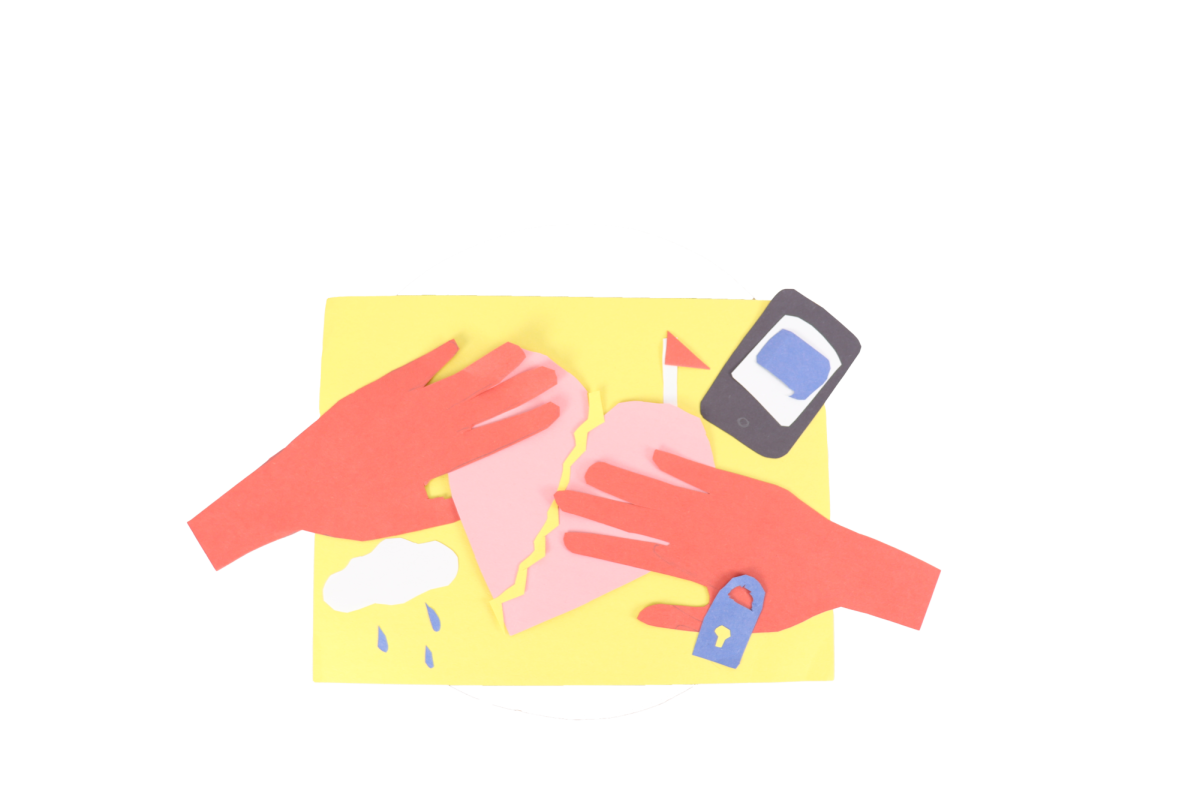
For students, relationships are a complex subject to learn and understand, from proper communication to understanding boundaries.
Amid the best of intentions, sometimes relationships can become damaging. According to Micki Lane, training education director at the Child Advocacy Center, a non-profit based out of Springfield, that helps abused children, it is important to understand red flags that might occur.
“A lot of kids and teens don’t know that what is happening to them is wrong, or they think somehow it’s their fault, whether it be in a relationship issue, at the hands of an adult or someone else that’s harming them,” Lane said. “If you don’t know something’s wrong, you don’t know to report it, an adult can’t help or intervene.”
Experiencing trauma at a young age can create a chain reaction of other unhealthy behaviors when entering adulthood. Micki Lane, a former forensic interviewer, has helped more than 3,000 children over the years.
“The more trauma they experienced, the more mental health issues they had — actual physical health issues — addictions, self-esteem,” Lane said. “It is possible for a child that has had these experiences to go into adult life with those same types of things. … But what we know is that kids and teens that have education prevention, [were] believed upon disclosure and receive mental health support have a high rate of being able to heal from their trauma.”
Lane said in order to maintain a healthy relationship, a couple needs to have proper communication.
“Communication is hard,” Lane said. “It can be scary and sometimes difficult. Conversations feel like confrontation, but they shouldn’t be if you’re in a trusting, caring relationship. We should be able to listen without judgment, be supportive and agree to disagree without having anger or taking things personally.”
Healthy high school relationships, like other relationships, focus on open communication.
Sophomores Evelina Graur and Wesley Jones have been together for more than two months. Gruar said she feels that healthy communication is the key to any relationship.
“That’s also a lot of the time kind of what breaks people,” Graur said. “They constantly strive to win and get at the other person. Instead of sitting down and being like ‘OK, here’s the
problem.’ ”
For many couples, spending time together allows for a closer bond in their relationship, with seemingly unimportant moments leading to fond memories.
“One of my favorites [memories] was one night before like a really hard snowstorm,” Jones said. “I ran over to her [Graur’s] house. And then we split a Vitamin Water — Red Bull-like drink. It was so bad, but it was just fun.”
The common trope is that relations are 50/50. However, Lane said it’s 80/20, with each person striving to be the 80 percent.
“The beauty of a good relationship is you’re what the other person needs in the moment,” Lane said. “Sometimes, in a relationship, you can only give 20 percent, and that’s when your partner can give the 80 percent. But if you’re the one always giving the 80 percent, that’s when the issues kind of start to come up ahead.”
Knowing what goes into a healthy relationship allows couples to feel comfortable and fulfilled.
“We just click … Wesley’s like a best friend,” Graur said.