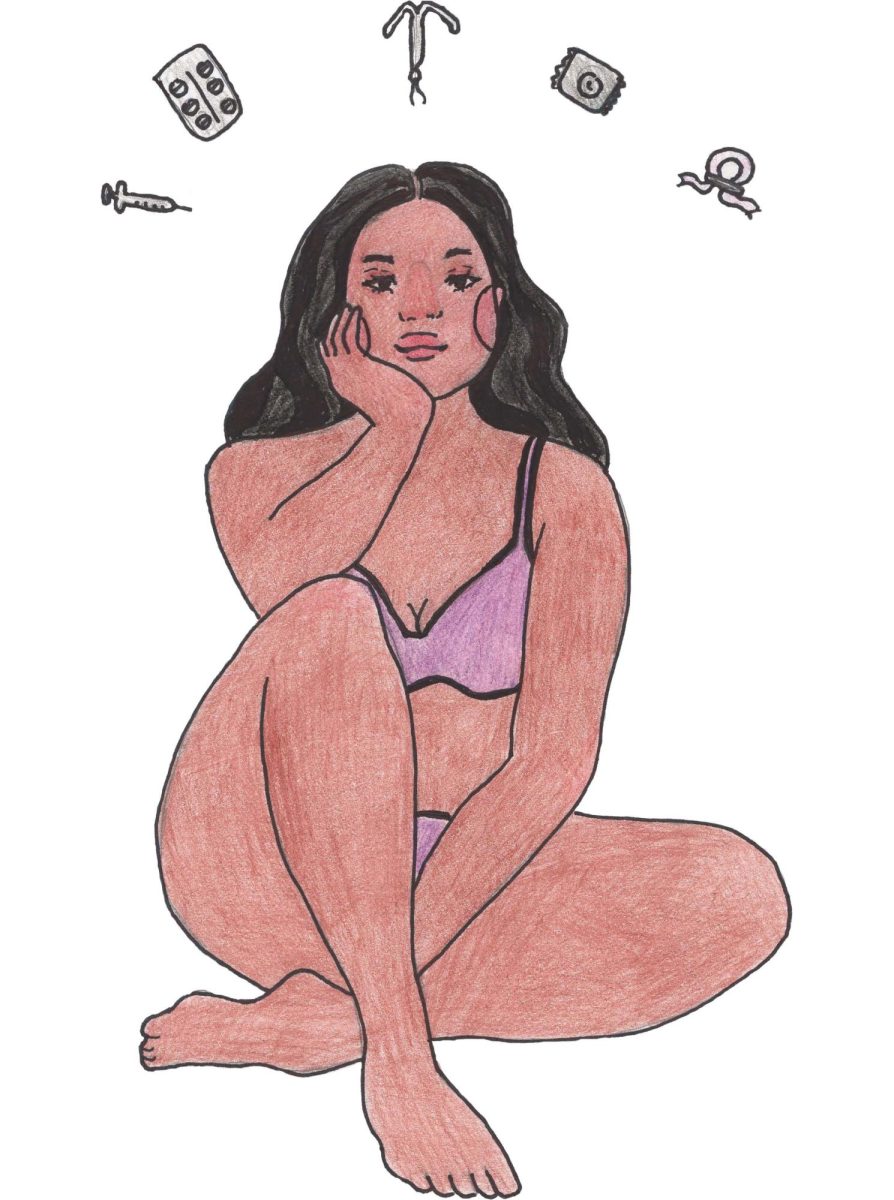
As states reshape abortion laws and redefine terms tied to reproductive care, confusion over what contraceptives are and who can access them has grown.
Among American females aged 15 to 49, 54.3 percent used contraception in 2022-23, according to the Centers for Disease Control and Prevention. Though contraception isn’t new, the legal and political landscape surrounding it has shifted alongside the rise of abortion bans. Changing legal language and widespread misinformation can make it harder for people, especially teens, to understand their options.
Contraceptives are tools used to manage reproductive health. For many women, that means birth control.
Dr. Sherry Ross, an obstetrician-gynocologist, author and chief medical officer at QuickMD, said birth control is commonly prescribed for reasons beyond pregnancy prevention.
“The birth control pill does an excellent job at preventing pregnancy but also has many health benefits,” Ross said. “This includes help with severe period cramps, controlling heavy and irregular periods, help with acne and fewer ovarian cysts.”
Ross said choosing a contraceptive method often depends on a patient’s medical history, age and individual health needs.
“When discussing expected side effects, typical length of duration and what are the non-negotiable side effects should be talked about openly and honestly with a trusted healthcare provider to ensure you have selected the best birth control for your personal needs,” Ross said. “ For most women, the benefits outweigh the risks.”
Access to contraception, however, is not determined by medical needs alone.
Lauren Wallace, senior counsel for reproductive rights and health at the National Women’s Law Center, said insurance coverage, cost and provider availability often shape whether people can obtain contraceptives. In her work helping patients navigate insurance appeals and billing disputes, she has seen how unclear or conflicting information can block access to care.
“The ability for people to get useful [healthcare] information about anything in this country is difficult,” Wallace said. “Then on top of that, you have the political nature and chaos of something like the Affordable Care Act. Even the dialogue around how people perceive it when it’s called the Affordable Care Act versus when people call it Obamacare makes it hard for people to receive and access the right information.”
Legal language has played a role in increasing confusion. Wallace said limited conversations about pregnancy and reproductive health have allowed lawmakers to blur distinctions between birth control and abortion.
She said that because contraceptives are widely used, legislation attempting to restrict them has been less likely to pass than traditional anti-abortion bills, even in communities opposed to abortion.
“We’ve seen this steady creep of moving from topics like abortion to expanding to birth control,” Wallace said.
Legislation framed this way can create confusion for both patients and healthcare providers about the legality of certain contraceptive methods.
“The way we talk about pregnancy in laws has been limited,” Wallace said.
One example Wallace pointed to was South Carolina’s Senate Bill 323, known as the “Unborn Child Protection Act,” which was aimed to redefine terms like “contraceptive” and “human embryo.” The bill failed to come to a vote.
The language shifts come as abortion bans expand nationwide. As of November, 2025, 13 states have total bans and 28 have bans based on the duration of pregnancy, according to the Guttmacher Institute.
Confusing legal definitions can compound misinformation already circulating about women’s health. “There’s this claim online, like, ‘Hormones are bad,’ ” Wallace said. “But there are so many different options of contraceptives based on people’s health conditions, and to say those blanket statements, it becomes dangerous.”
Ross said myths about birth control, including claims that it causes weight gain or infertility are especially common among young people.
“Study after study does not show weight gain to be a side effect of the birth control pill,” Ross said. “There is also no evidence that the pill causes infertility. Many side effects are temporary, and if they persist, another option can be chosen.”
Wallace said reducing misinformation requires people to engage more openly in conversations about healthcare. Media representation, she said, could help create more dialogue and establish a shared language between patient and medical professionals.
Senior Lydia Shockley said health was her priority when she decided to go on birth control.
“A lot of people have their opinions about birth control, especially in this area,” Shockley said. “But honestly, it’s not their business. I needed it for myself, and it was a good health decision for me.”
Shockley said when using birth control, it’s important to understand what goes into using it effectively and learning about misconceptions around it.
“Definitely don’t go on TikTok,” Shockley said. “I know that a lot of people are like, ‘I have a question, I’ll just go on TikTok.’ Please use actual medical documents. You can take advice from people who are on it. … But if you’re looking for specific medical advice, go to medical sites that are going to explain it.”
Ross said patients need to speak openly with a trusted clinician when making medical choices about contraceptives. In addition, policy clarity is needed so providers know what they may safely prescribe, Wallace said.
“We need to turn shame and anxiety when discussing these sensitive medical topics into pride,” Ross said. “What gives me hope about the future of women’s health education is that there is a real demand for relatable information.”