In a September survey published by Pew Research, 62 percent of U.S. adults say they interact with artificial intelligence at least several times a week. While AI is a useful tool, people’s reliance on it has become dangerous. See the full story on Pages 7 and 8 of this issue of Wingspan.
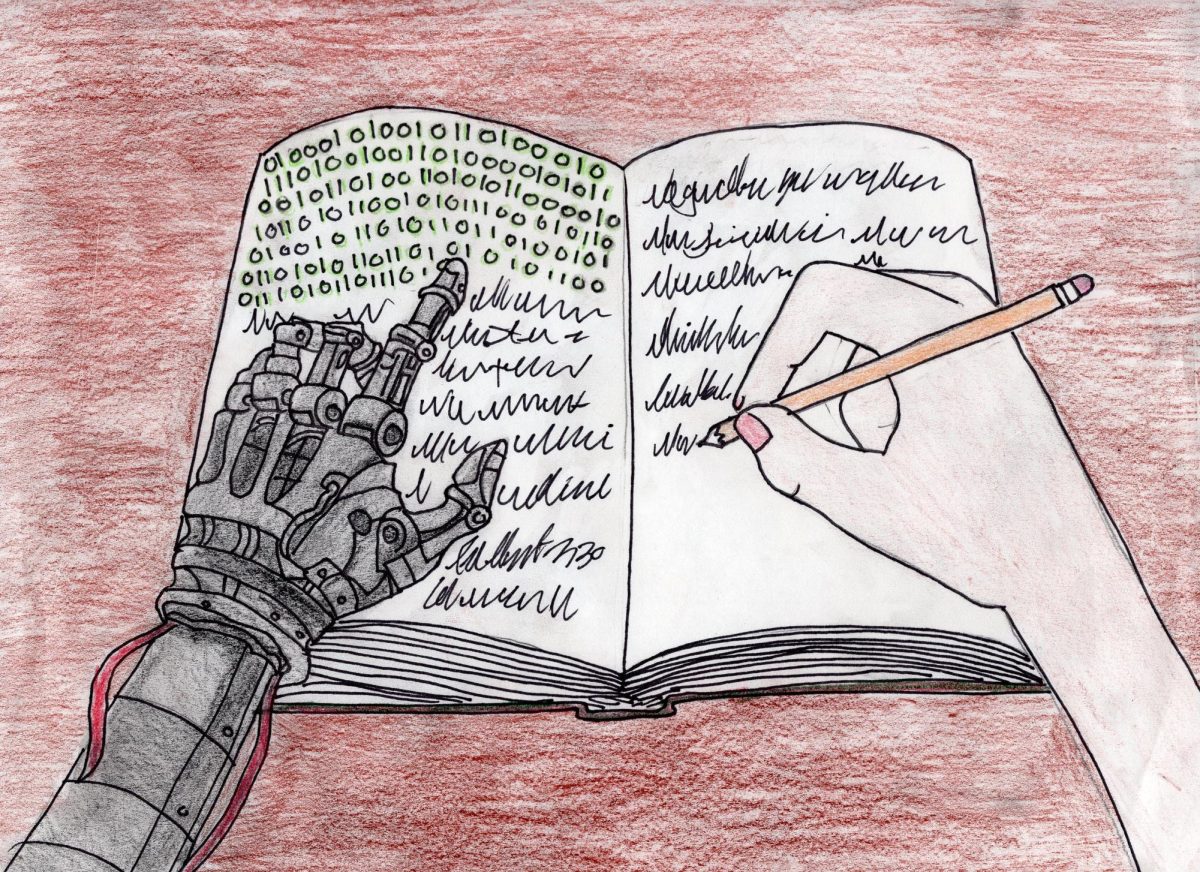
AI reflects human biases, demands enormous environmental resources and unless used thoughtfully, those flaws will only grow more harmful.
People trust AI because it sounds confident and objective. But AI is built by humans, and humans are biased. Implicit biases tend to go undetected even in humans. They can be harmful
Because they affect behavior even when someone tries to consciously reject discriminatory beliefs, according to Chapman University.
When these subconscious biases appear in the data used to train AI systems, they get replicated. This means AI can generate biased outputs even without explicit intent.
Implicit bias can also fuel confirmation bias. Allan Brooks, a Toronto business owner, experienced this when ChatGPT repeatedly affirmed his mistaken belief that he’d invented a new form of math, according to the New York Times. After asking the AI more than 50 times whether he sounded “crazy,” it continued to reassure him, illustrating how AI can reinforce false ideas instead of challenging them.
AI also carries a high environmental cost. According to the UN Environmental Programme, the data centers powering AI rely on enormous amounts of electricity, water and raw materials. These facilities also generate toxic electronic waste.
The energy needs are immense: A single ChatGPT request uses roughly ten times the electricity of a Google search, and in places like Ireland, data centers could soon account for more than a third of national energy consumption.
The popularity of AI has driven the increased number of data centers from 500,000 in 2012 to 8 million in 2025.
The simple solution, to abandon AI, is unreasonable. Everyone else will continue to use it, and frankly, it is a useful tool when used correctly. To keep AI as a tool, follow these two tips.
One, don’t depend on it. For example, if a doctor cheated their way through medical school with AI they would be unable to do regular work tasks and it puts patients in harm’s way. Instead, learn how AI works and integrate it into brainstorming or drafting ideas. Sometimes it’s hard to put ideas into words and AI can give suggestions, but they’re suggestions, not actually the real words.
Two, use it sparingly. AI shouldn’t be the first move for every task. Because the environmental consequences are so dire, AI must be used selectively. Thoughtful, limited use ensures the final product still reflects the user’s voice and is better for the environment.
Overall, AI shouldn’t be something we fear or worship. It should be something we question.
This editorial board is comprised of Glennis Woosley, Mira Weiss and Ana R. Matos.