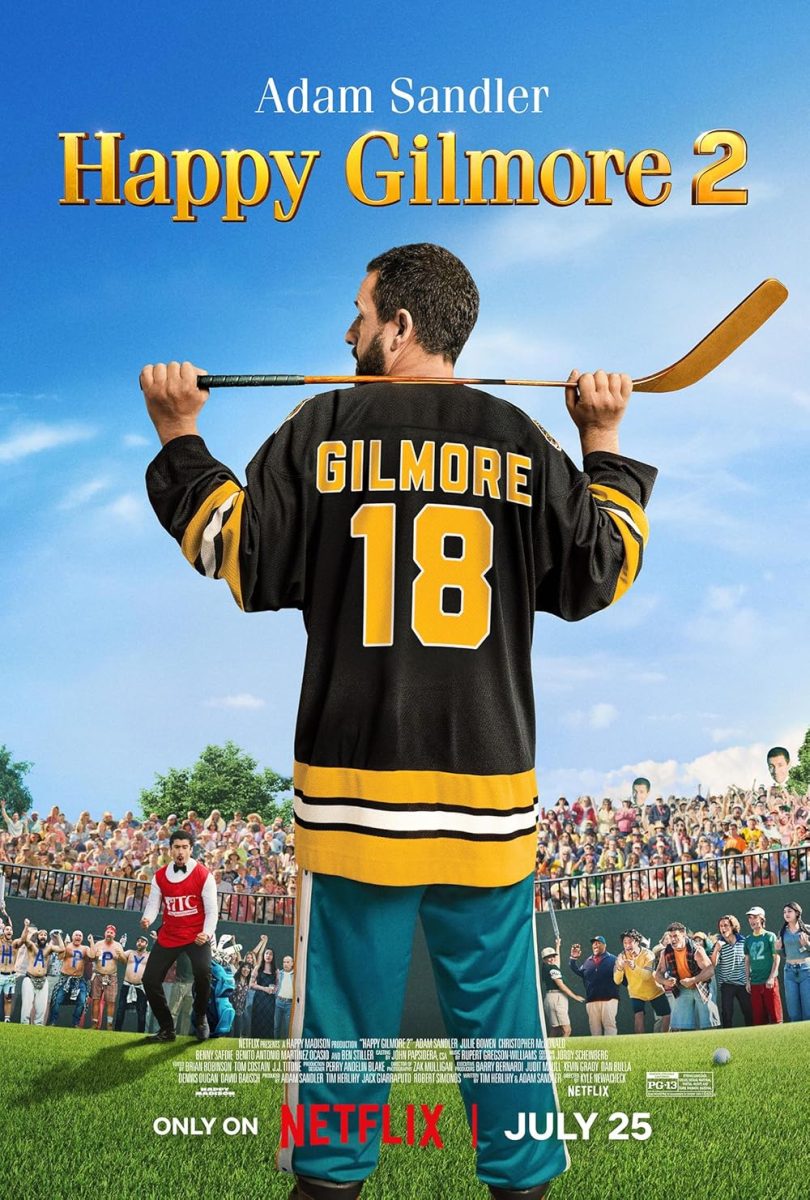
Comedy sequels tend to have a poor reputation, so when “Happy Gilmore 2” was announced, fans had their concerns. Almost 30 years after the original film, Netflix released the second with a cast full of cameos.
The film follows a similar plot to its original, even including the same main conflict of a golf tournament as shown in the first movie. Even including Happy having to relearn major aspects of the game. While the movie definitely had an inauthentic feeling, it still kept some of the charm from the first movie. It had a surprising amount of good jokes sprinkled through, where Sandler’s personality shines in the scene. The movie also focuses on harder-hitting subjects for a comedy, touching on the lows of alcoholism and grief.
If the sequel did not have such big shoes to fill, it would feel like a much more well-rounded movie; however, some choices made were clearly an attempt to keep audiences interested rather than going for originality.
“Happy Gilmore 2” has over 60 cameos, with faces that the audience is sure to recognize, including Guy Fieri, Post Malone and SNL’s Marcello Hernandez. These cameos at times feel like a lazy attempt to draw in new viewers who hope to see their favorite celebrity for a 30-second scene, while also giving the impression that the viewers’ time is not valued, and that the paycheck after the movie’s release was the number one priority for some creators behind it.
The plot has a few too many similarities to the first movie to feel like a passion project, living up to the stereotype of typical comedy sequels. While Happy’s life after the first movie is shown briefly, the film quickly shifts its focus and begins to feel too reminiscent of the first one with the main conflicts. At times, old characters are reintroduced for seemingly no reason other than to remind the audience of the first film.
The movie was genuinely enjoyable despite the plot feeling repetitive. Sandler is a talented comedian, and that is still very present even now, thirty years later. A select few of the cameos felt intentional and important, whether intended for comedic purposes or to move the plot along. Despite the redundancy, families can enjoy this movie for a quick laugh, and older viewers can hold on to a cherished movie from their past.
Appealing to a new and younger audience that may not be familiar with a film is difficult. However, with Adam Sandler being so known in the film industry they didn’t need to work so hard on tailoring the movie to the younger generations. If a second film is so desired, originality should be prioritized rather than easy callbacks to the original film that many viewers will only vaguely remember anyway. This film had potential to really draw in new viewers but it will likely remain a typical comedy sequel, going down in the books as a lesser version of the first and decreasing the value of the debut.
Summary:
After losing his wife to a golfing incident, respected golfer Happy Gilmore decides to put down the putter forever and changes careers drastically, becoming an employee at his local grocery store.Since the last time viewers have seen Happy, he has had four children, Happy’s daughter is a very talented ballet dancer; however, his salary cannot cover the costs of the activity, forcing him to turn back to his past life of golf.
After 30 years of being away from the course, Happy has to relearn the basics. When a new style of golfer enters the tournament Happy is participating in, he faces a new set of challenges and must set aside his past in the sport.